Questions
Straight answers to what people ask us most. Tap a question to open the answer.
Questions
Good to know
Do I need a permit to build a tiki or chickee hut?+
It's the #1 question in the tiki hut industry, and it has a unique answer when you work with us. Chickees built by the Seminole Tribe are exempt from the Florida Building Code, and so are the wooden decks we build with them: no building permit and no engineered drawings. Tiki huts follow normal local rules. Electrical or plumbing added to a chickee still gets its own permit.
Always confirm local zoning rules for your specific property with your municipality.
What's the difference between a tiki hut and a chickee hut?+
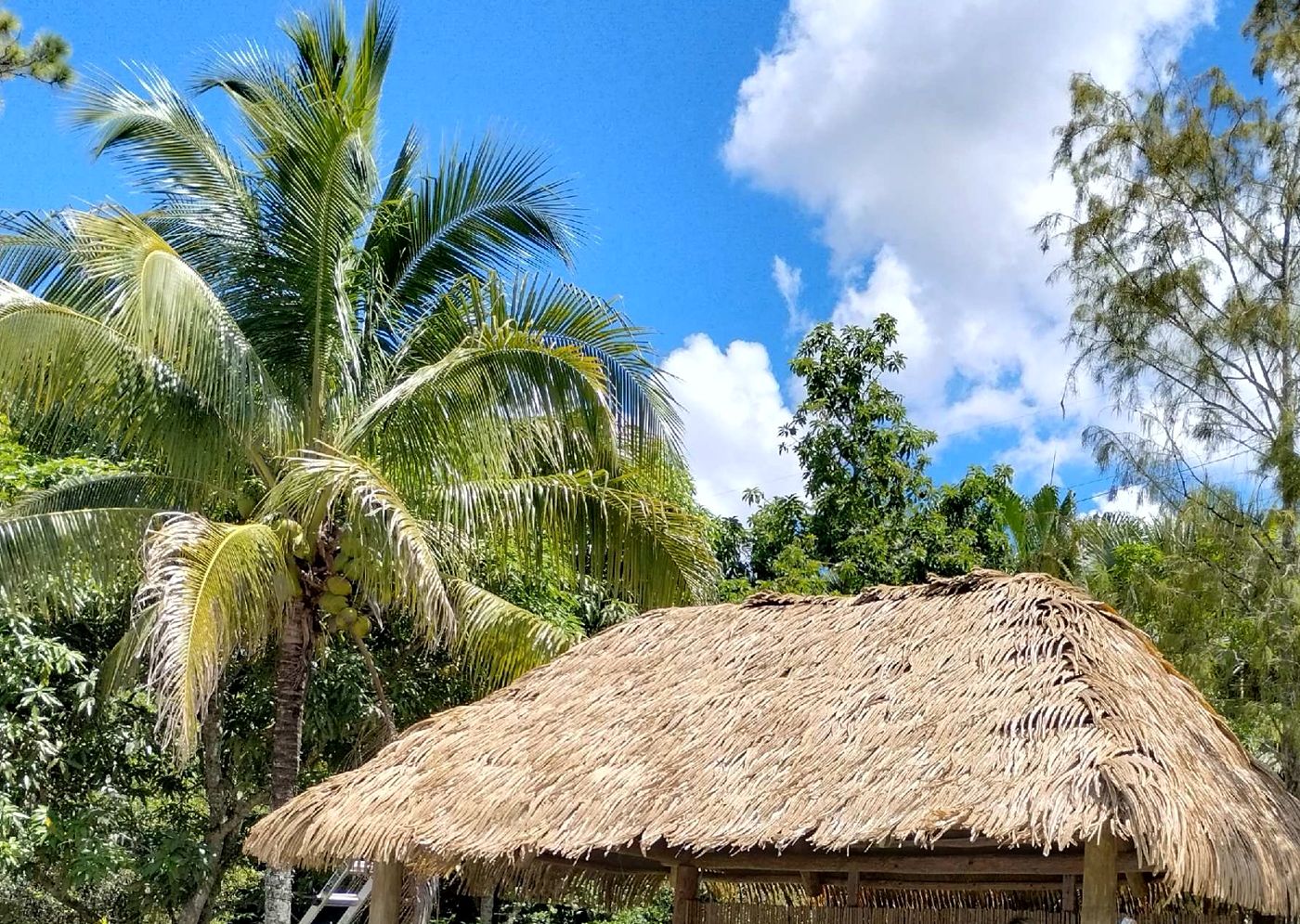
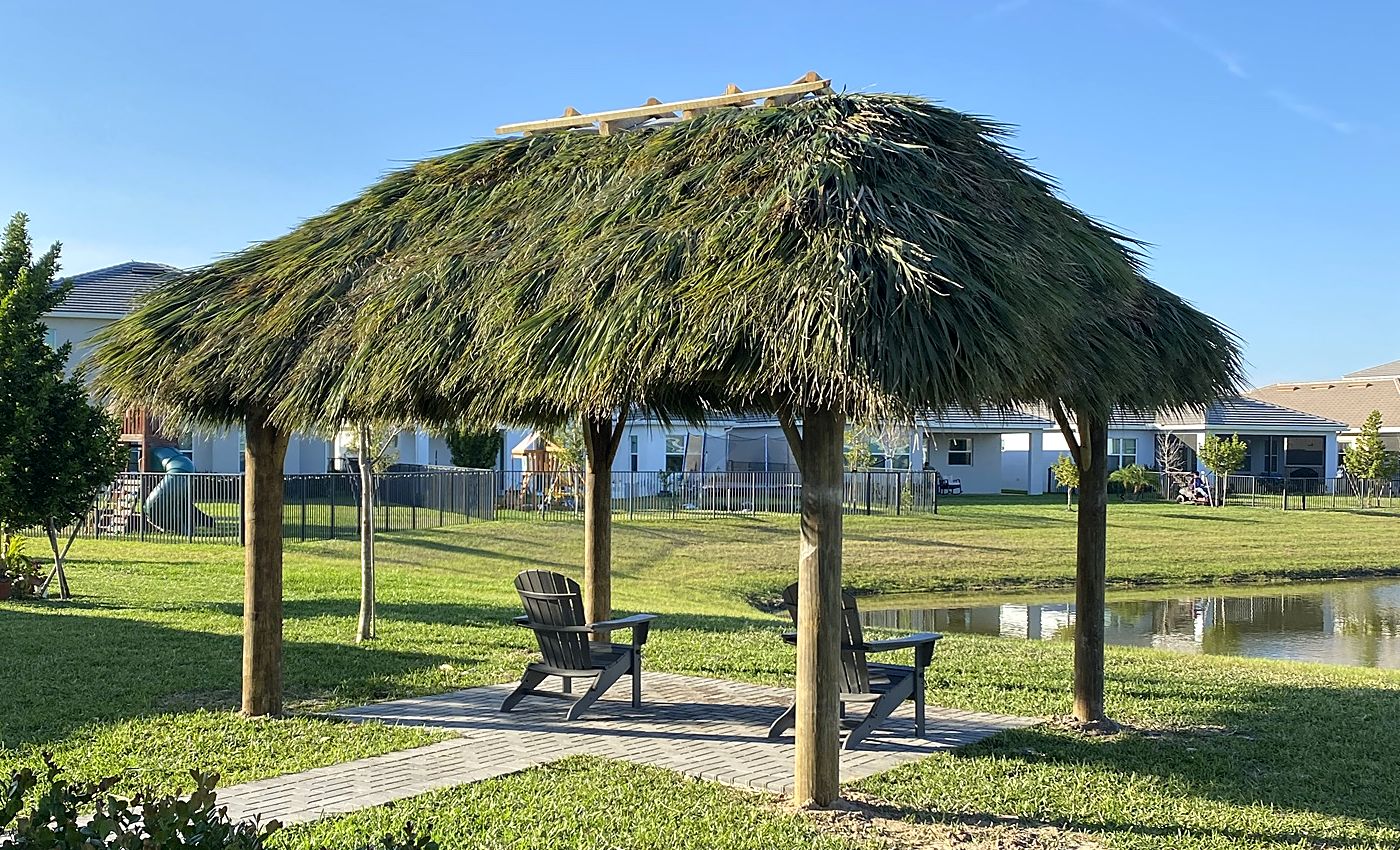
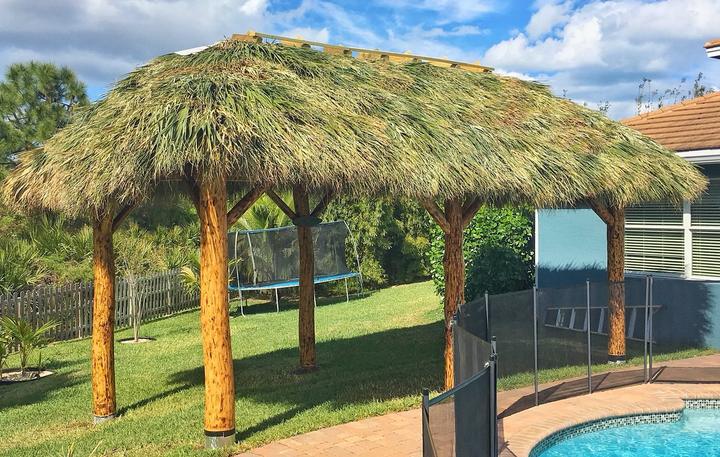
Both are open-air structures with distinct origins. Tiki huts are inspired by Polynesian design and are typically built with marine pressure-treated round logs and palm-thatched roofing for a tropical, island-paradise look.
Chickee huts are a Native American tradition of Florida's Seminole and Miccosukee tribes. They're built with cypress logs and palmetto thatch, have a raised platform floor, and carry a rustic, heritage-rich look.
The big practical difference: a chickee built by the Seminoles is exempt from the Florida Building Code and needs no permit or engineered drawings, and Seminole-built decks are exempt too. A tiki hut follows normal local permit rules.
How long does a thatched roof last, and when should I re-thatch?+
Natural palm or palmetto thatch lasts about 7 years in Florida when built right: a high pitch, the Seminole roof style, palm leaves layered two to three deep and thick corners. Some of our roofs have lasted 14 years. How long it lasts comes down to who builds it, plus rain, wind and local wildlife. Regular maintenance and timely re-thatching protect the structure's integrity, insulation and water resistance.
Our team replaces worn natural material with traditional techniques, and fall is the best season to do it.
Are synthetic tiki huts a good alternative to natural ones?+
Synthetic huts use high-quality PVC, resin or composite and give the same look as a natural hut with much greater durability, lasting up to 30 years. They resist fading, rot and pest damage better than natural thatch.
Natural huts have the authentic look and feel, are more eco-friendly, and are often preferred for traditional or heritage settings.
What areas of Florida do you serve?+
Communities across the state, including Miami, Fort Lauderdale, West Palm Beach, Boca Raton, Jupiter, Delray Beach, Port Saint Lucie, Naples, Fort Myers, Sarasota, St. Petersburg, Tampa, Orlando, Daytona, Melbourne, Ocala and more.
How do I get a quote?+
Sketch your hut in the designer above and send the request, email Tikipalmhuts@gmail.com, or call (352) 881-2124. Estimates are free and in person, 7 am to 7 pm, 7 days a week.